

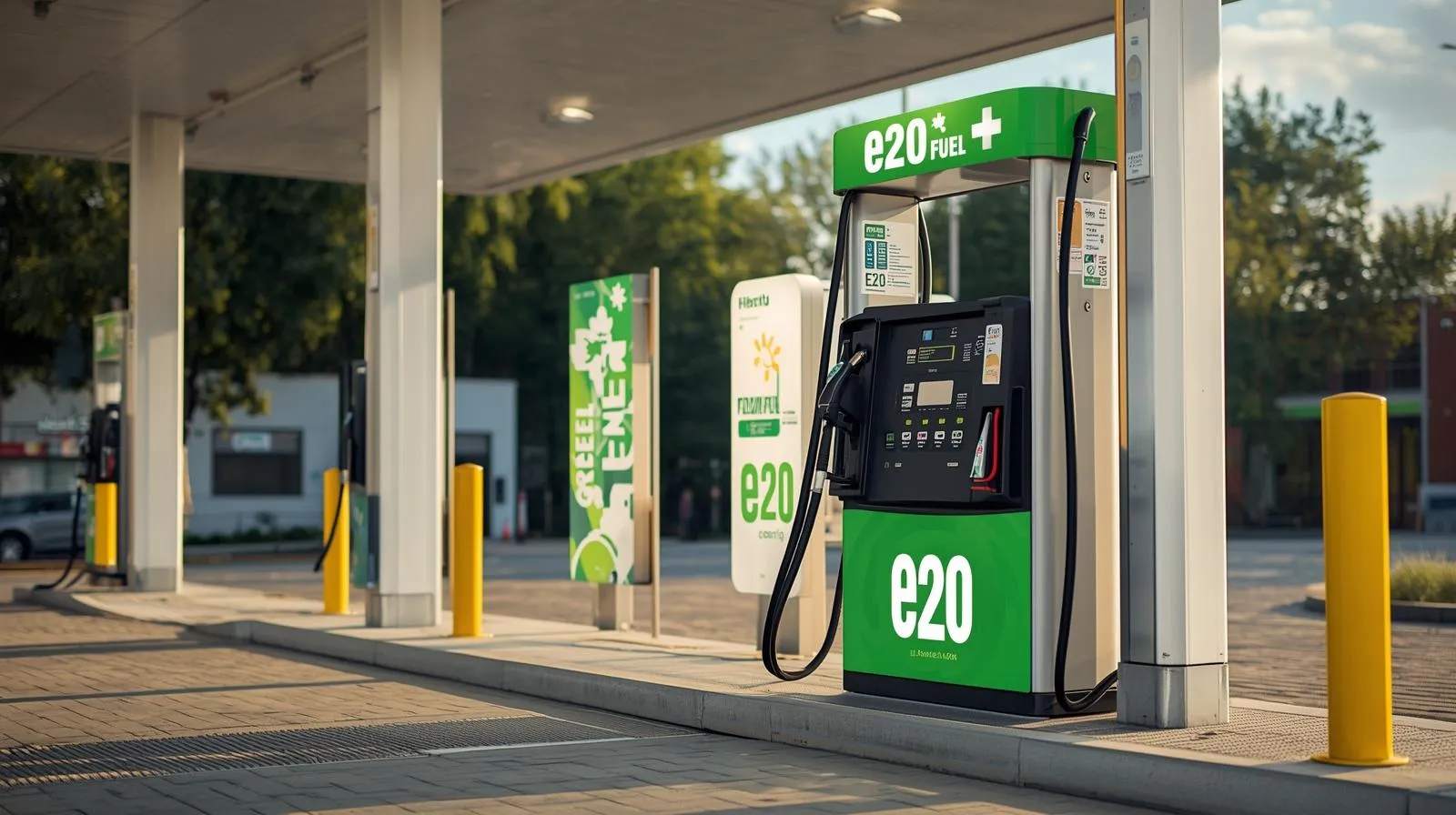
E20 Fuel Is Here: But Is Your Car Ready for It? How to Save Mileage and Money in the New Petrol Era

India’s fuel landscape is changing faster than cars change highway lanes.
As part of the government’s biofuel vision, petrol pumps across the country have begun offering E20 fuel, a blend of 20 percent ethanol and 80 percent petrol.
It’s a historic move toward cleaner energy and reduced oil dependence. But it also brings confusion and questions for millions of car owners:
Will E20 affect my car’s mileage? Is my vehicle compatible with it? And most importantly, how do I save money and engine life in this new petrol era?
Let’s decode everything you need to know.
What Is E20 Fuel, and Why Is It Being Introduced?
E20 fuel is petrol blended with 20 percent ethano, an alcohol-based biofuel made primarily from sugarcane, corn, and other agricultural waste. It’s renewable, less polluting, and helps India reduce dependence on imported crude oil.
The Government of India aims to achieve 20 percent ethanol blending across the country by 2025, five years ahead of the original schedule. This transition is not just environmental; it’s economic. India spends billions every year on oil imports. Ethanol blending helps redirect part of that spending back to Indian farmers and ethanol producers.
So, in theory, E20 is a win-win for the economy and the planet. But what does it mean for your car?
The Science Behind E20: Cleaner But Lower Energy
Here’s the key fact: Ethanol has a lower energy density than petrol.
- That means E20 contains less energy per litre compared to pure petrol.
- The result? A slight drop in fuel efficiency, usually between 6–10 percent, depending on your vehicle type and driving style.
- For example, if your car currently delivers 15 km/litre on E10 fuel, you might see that fall to 13.5 - 14 km/litre with E20.
This isn’t a fault in your car, it’s simply how ethanol burns. It evaporates faster and has different combustion characteristics than petrol.
Is Your Car E20-Ready?
Not all cars are built to handle E20 fuel.
Ethanol is hygroscopic, it absorbs moisture from the air, and slightly corrosive to rubber, plastic, and aluminum parts. Older vehicles, especially those manufactured before 2022, may experience wear and tear in fuel lines, gaskets, or injectors.
Most new cars launched after April 2023 by brands like Maruti Suzuki, Hyundai, Tata Motors, Toyota, and Honda are E20-compatible. Automakers have started using ethanol-resistant materials and engine designs suited for higher ethanol blends.
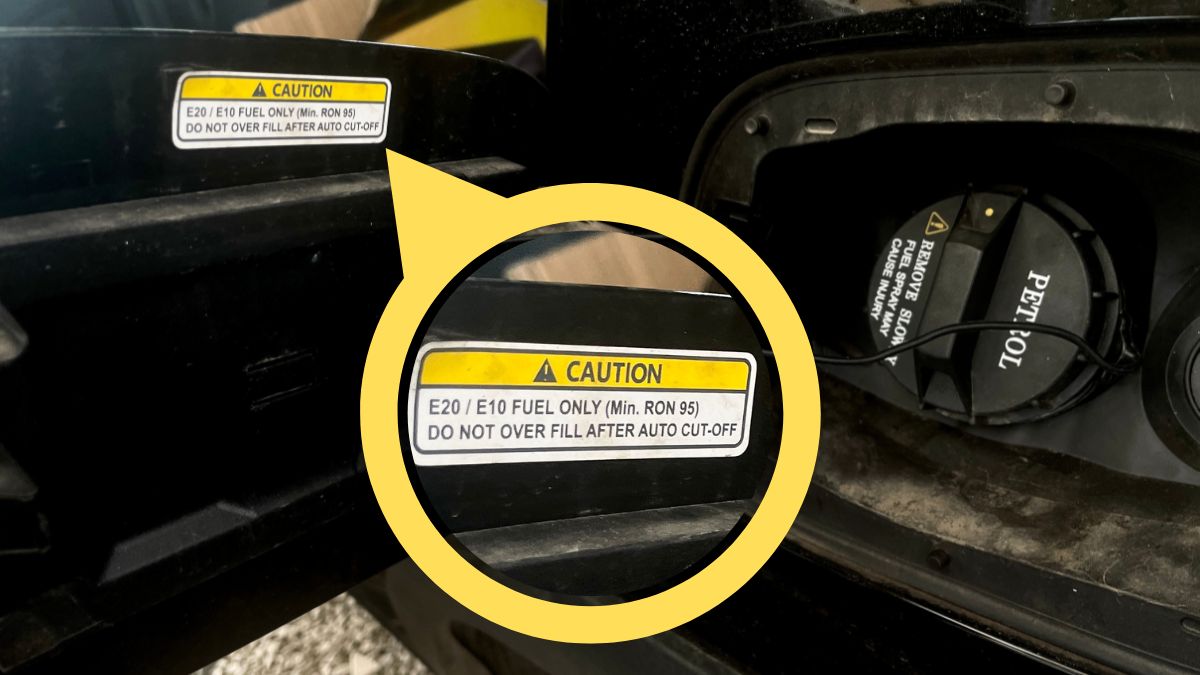
To check your car’s compatibility:
- Look for a label near the fuel lid or inside the owner’s manual.
- If it says “E20” or “E10–E20,” your car is compatible.
- If not, it’s best to consult your service advisor before refueling with E20 regularly.
What Happens If You Use E20 in a Non-Compatible Car?
If your car isn’t designed for E20, you may not notice immediate damage, but long-term effects can include:
- Fuel System Corrosion: Ethanol can degrade rubber seals and hoses, leading to leaks.
- Engine Knocking or Rough Idling: Moisture absorption can cause incomplete combustion.
- Reduced Mileage: Lower energy content and older engine tuning reduce efficiency.
- Increased Maintenance: Fuel filters and injectors may clog faster.
These issues don’t appear overnight, but they build up with continuous E20 use in non-compatible vehicles.
How to Save Mileage & Money with E20
Switching to E20 doesn’t have to mean spending more. With the right care, you can minimize mileage drops and keep your car performing efficiently.
Here are MyFNG’s 7 proven tips for car owners in the E20 era:
1. Get a Complete Engine and Fuel System Check
Before making the switch, book a professional inspection. Ensure there are no leaks, worn seals, or residue buildup in the injectors or fuel lines. Preventive maintenance costs far less than post-damage repairs.
Book Your Complete Engine & Fuel System Check
2. Use Quality Engine Oil
Ethanol-blended fuels tend to burn slightly hotter. Using premium or manufacturer-recommended oil can protect your engine and maintain smooth performance.
3. Maintain Optimal Tyre Pressure
Every 1 psi drop in tyre pressure can lower mileage by up to 2 percent. Check your tyres weekly, as underinflation combined with E20’s lower energy content compounds efficiency loss.
4. Drive Smoothly
Avoid harsh acceleration or braking. E20 burns faster under stress, so smoother driving maintains consistent combustion and better mileage.
5. Clean Your Air Filter Regularly
Ethanol attracts moisture, which can lead to carbon deposits and restricted airflow. A clean air filter ensures efficient combustion and better throttle response.
6. Use Trusted Fuel Stations
Always refuel from reputed outlets. Poorly blended or contaminated ethanol fuel can cause deposits and harm sensors or fuel pumps.
7. Keep Your Car Tuned
Regular servicing is now more important than ever. Ask your mechanic to check spark plugs, injectors, and throttle body health to ensure E20 burns efficiently.
The Economic Equation: Are You Really Saving with E20?
At first glance, ethanol-blended fuel seems cheaper because ethanol costs less than imported petrol. But the savings can get offset if your mileage drops.
For example:
- E10 petrol: Rs 100/litre, mileage 15 km/litre → Rs 6.67/km
- E20 petrol: Rs 97/litre, mileage 13.5 km/litre → Rs 7.18/km
- This small difference adds up over thousands of kilometers. That’s why maintenance and driving habits make a real difference in your savings.
- The key is efficiency, not just fuel price.
Environmental Benefits of E20 Fuel
Even with a slight mileage dip, E20 fuel has significant environmental benefits:
- Lower CO₂ emissions: Reduces carbon footprint by up to 10 percent.
- Cleaner combustion: Ethanol burns with less soot and carbon monoxide.
- Supports sustainability: Uses renewable resources like sugarcane and agricultural residue.
So, while individual fuel economy may drop slightly, the collective environmental gain makes it worthwhile in the long run.
E20 and the Future of Indian Mobility
India’s journey to E20 is just the beginning. Automakers are already developing flex-fuel engines that can handle blends up to E85 (85 percent ethanol). This flexibility will help consumers adapt easily without performance loss.
The ethanol program works hand-in-hand with India’s electric mobility push. Together, EVs and biofuels will shape a cleaner, more sustainable automotive ecosystem.
MyFNG’s Take: Be Prepared, Not Surprised
E20 is a progressive step for India, but awareness and preparation are key. Many car owners will benefit from cleaner fuel only if they ensure their vehicles are ready for it.
At MyFNG, we recommend a quick E20 Readiness Check for all car owners. Our technicians inspect your fuel system, injectors, hoses, and engine components to ensure compatibility.
A small preventive step today can save thousands in potential repair costs tomorrow, and keep your car running smooth, efficient, and emission-friendly.
Final Thoughts
The shift to E20 marks a new chapter in India’s automotive story, one that balances economic growth with environmental responsibility.
Yes, there will be minor adjustments in performance and cost. But with proper maintenance and awareness, car owners can thrive in this new era of cleaner fuels.
E20 isn’t just a new fuel blend. It’s the future of driving, and the smarter you adapt, the smoother your ride will be.
Read Our More Blogs:
1) The 10-Minute Car Check That Extends Engine Life by Years
2) Is It Time for a Wheel Alignment? Here’s How to Know
3) Top 10 Reasons Why People Prefer Multi-Brand Car Garages in Navi Mumbai
4) How to Know if Your Service Centre is Using Original Car Parts?
5) 10 Fun Facts About Cars You Probably Didn’t Know - Every Car Owner Must Know
6) Car Care 101 How to Kick Out Damp Smells and Foggy Interiors (Mumbai Style)
7) What the Alphabets and Digits on Your Car Number Plate Mean - A Complete Guide for Indian Car Owners
8) What Mechanics Actually Do in a Full Car Service (and What They Skip!)
9) Top 7 Scams Car Service Centres Do, And How to Avoid Them
10) Just Bought a Second Hand Car in Mumbai? Here�s Your First Service Checklist